

When Dr Jerricah Holder approached me about turning her School Wellbeing Cards system into an app, I immediately knew: I have to get this job. This wasn't just another app project — this was about two things I deeply care about: the human mind and education.
Having struggled in school myself, I didn't develop a passion for learning until adulthood. The School Wellbeing Cards immediately resonated with me, reminding me of my own challenges fitting in, tuning out subjects that didn't capture my imagination, and diving deep into the ones that did. This was about giving young people a voice I never had — a safe, structured way to share their experiences, challenges, and potential in school life.
The card system: Already a bestseller
The School Wellbeing Cards are a well-established system, developed by educational psychologist Dr Jerricah Holder. This is how Dr Jerricah Holder describes them on her website:
"*The School Wellbeing Cards are a set of child-centred tools, which are grounded in resilience research, and reflect common risk and protective factors that underpin school connectedness, belonging and wellbeing.*
*Through a card sorting activity children and young people are empowered to share their experiences of school/college and thus provide invaluable insight into the strengths and barriers that children encounter in their educational attendance and wellbeing.*"
Until now, the cards existed only in paper form and as a rudimentary website implementation that didn't work properly on mobile devices. In our mobile-first world, a proper digital version was essential. Dr Holder got in touch, and within days I was at work.
Bringing the cards to life digitally
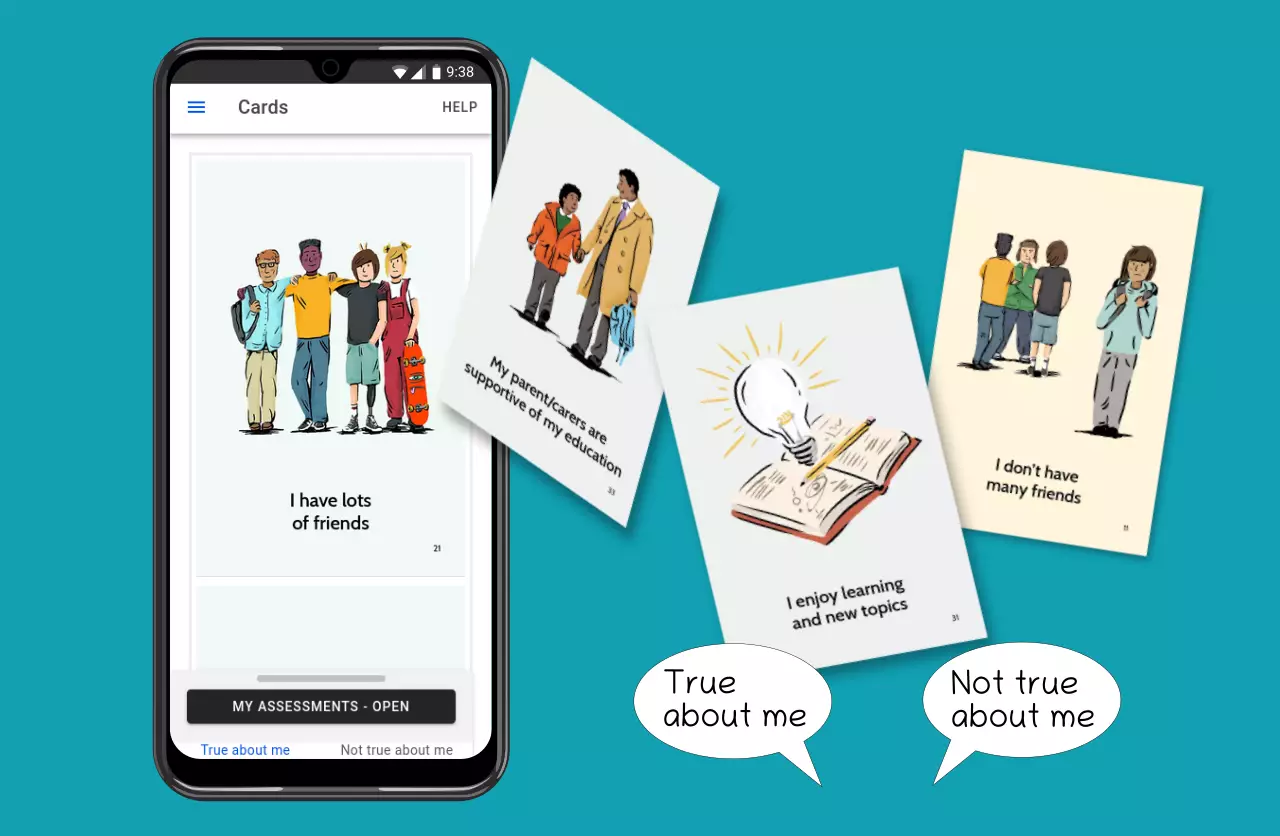
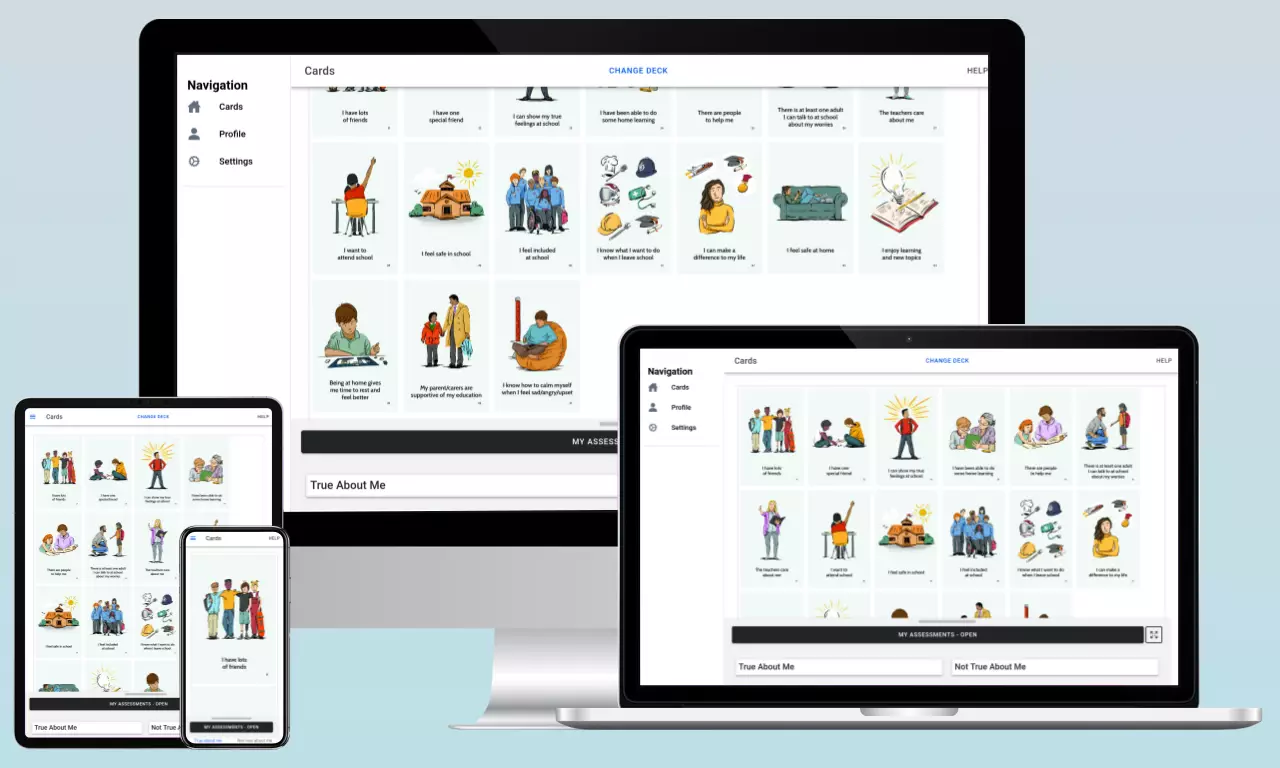
The concept is simple and straightforward: Students engage with digital cards representing different aspects of school life—from relationships with teachers, peers, and family to feelings about lessons and break times, as well as their wellbeing at home. Through an intuitive sorting interface, they categorize these cards based on their personal experiences. The results give educators and psychologists valuable insight into what's supporting each student's wellbeing and what barriers they're facing.
Technical implementation
On the technical side, the project tickled my professional brain. I knew immediately this was a clear case for Laravel (back-end) and Ionic (cross-platform front-end)—two tools I love working with for their well-structured, robust infrastructure. They pair perfectly together. I opted to use the Vue framework in both Laravel and Ionic for UI implementation. It was the best fit for a game-like interactive interface and made it easy to create a unified look and feel across both sides.
Accessibility and data protection
Full accessibility for people with disabilities according to WCAG 2.2 isn't just a legal requirement, it's essential. Having worked with special needs students, I've seen them struggle with websites and apps because accessibility often falls short.
Many web designers lack the advanced programming skills required, relying instead on DIY platforms with limited capabilities. Even experienced developers often haven't gained the necessary knowledge. The result? Many school websites fail to meet current legal accessibility requirements.
The School Wellbeing Cards App is 100% compliant with current legal requirements. It works with screen readers for blind users, provides a high-contrast mode for visually impaired users, and can be fully navigated by keyboard or alternative input devices like voice control.
Another area where many school websites struggle is data protection and privacy. GDPR (General Data Protection Regulation) is the European and UK regulatory framework governing how organisations collect and store personal data. The key requirements are secure storage, transparency about what's collected and why, and tools for users to access their data. The School Wellbeing Cards App meets all these criteria through Laravel's built-in security best practices, a comprehensive data protection statement developed with legal assistance, and an easy in-app method for users to download all their personal data.
What's next
The current implementation is just the beginning. We're already planning to convert the Progressive Web App into native apps for Android and iOS, available through their respective app stores. These will work completely offline and include features like push notifications to remind students to complete their sessions. We're also discussing AI-assisted evaluation of results.
Making a difference through technology
This project represents everything I value in development work: using technology to genuinely support young people, building accessible and secure systems, and collaborating with education professionals who are making a real difference. If you're working in education or student services and need a digital solution that prioritizes accessibility, data protection, and user wellbeing, I'd love to discuss how I can help.
If you work in education or psychology and you need a website or app, please don't hesitate to get in touch for a free, non-binding consultation.
Find out more about the School Wellbeing Cards App in our portfolio